
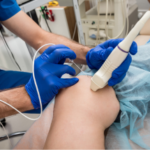
- Are you looking to explore how lung ultrasound can be useful on your daily rounds?
- Would your patients benefit from seeing exactly how and why your treatment may be helping them?
- Are you frustrated or uncomfortable making a diagnosis from what you see?
- Do work pressures mean you haven’t had the time to develop a systematic scanning or procedural technique?
- Would having an expert on your shoulder provide reassurance that you’re on the right track?
Then you’ve come to the right place.
Our range of practical lung ultrasound courses will make all the difference.
Led by Australia’s best ultrasound educators, we’ll help you make clinical decisions faster with point-of-care ultrasound (POCUS).
Discover new and clever ways to get the most out of ultrasound; develop a structured step-by-step approach to imaging; increase your confidence and decrease treatment times.
Find a course, set a date and register now!
Lung Ultrasound Course
- Modules (total): 3
- Skill level: All
- Duration (days): 1
- Lectures (hours): 2.25
- Scan time (hours): 4.25
Lung Ultrasound Course - Blended
- Online (hours): 10+
- Videos on demand: 16 (>4.25 hours)
- Resources: Yes
- Downloadable learning activities: Yes
- Skills development plan: Yes
- Case studies: 9 (>1.5 hours)
- Scanning time (hours): 3
- Lifetime access: Yes
Lung Ultrasound (online module)
- Duration (hours): 10+
- Videos on demand: 16 (>4.25 hours)
- Resources: Yes
- Downloadable learning activities: Yes
- Skills development plan: Yes
- Case studies: 9 (>1.5 hours)
- Lifetime access: Yes
Getting Started in Ultrasound Course - Online
- Duration (hours): 5+
- Videos on demand: 11 (>3 hours)
- Resources: Yes
- Downloadable learning activities: Yes
- Skills development plan: No
- Lifetime access: Yes


It is our strong belief – regardless of curriculum requirements – that every anaesthetist must understand ultrasound. Whether you’re placing a peripheral or central line, performing a pre-surgical cardiac assessment, initiating a nerve block or assessing an airway, ultrasound is invaluable. Regardless of its utility in your context, knowing what ultrasound can do, and how it can be applied is like a good shot of espresso coffee – once you get a taste you’ll want more. And more…
And once you get started it’s a no brainer that ultrasound skills will help you be a better health practitioner. In fact, ultrasound is recognised around the world as one of the most important skills you can develop to improve outcomes, save time and money (for you and your patient).
Unfortunately, most anaesthetists have been exposed to very little training. And where they have it has been in a very unorganised and scattered approach. More often than not training has been provided by energetic enthusiasts in the workplace who can demonstrate the potential for ultrasound, but – while passionate – haven’t invested in their ability to teach the art and science behind it. Plus the compromises that we all know come from training at work means a less than ideal learning environment. This results in little take away skills, no pathway to develop skills and ultimately disappointment.
But you can do something about this. In order for you to avoid the stressful ups and downs of learning ultrasound, having a strong foundation on which to build your skills and a clear plan in place to support your development is fundamental. That’s where we can help.

Skills Development
FREE weekday shuttle to the Zedu HQ training facility when you book directly here (not via other sites such as booking.com) – simply advise the friendly hosts at Quest Bundoora and they will take care of the rest.
Quest Bundoora serviced apartments are located just 10 minutes from the Zedu HQ and offers fully self contained accommodation options for the short and long term traveller. The 4½ star property comprises of 76 serviced apartments including Studio, One, Two and Three Bedroom Apartments, as well as brand new Three Bedroom Townhouses with private courtyards. The Studio Apartments with kitchenettes are the perfect alternative to a hotel room. The One, Two and Three bedroom apartments as well as the Three Bedroom Townhouses are ideal for families, colleagues or larger groups looking for a home away from home experience with full kitchens and laundry facilities.

Scanning Skills

Learning Pathway

Support
Zedu’s accredited ultrasound training courses follow a proven step-by-step program to guide anaesthetists through the myriad of learning strategies and ultrasound applications to find what‘s most effective to build a skillset that works in your clinical context.
Each course follows a systematised approach to help you understand principles, develop skills and implement strategies that have worked for thousands of physicians in Australia, New Zealand and around the world.
It starts with registration, where you’re provided access to a range of online resources and activities to prepare you before you arrive. Don’t worry – this is not onerous, with videos and resources focused on the topics of that course.
Once you get here you’ll be working with a team of qualified sonographer educators trained in the specifics of point-of-care applications, you get the opportunity to work hand-in-hand with experts. Whatever your level of experience we adapt to your needs, accelerating your personal learning curve. The ultimate goal is to give you the skills, abilities and knowledge to successfully and independently use ultrasound – regardless of the location or technology.
From lung and heart, needle guidance and anatomical assessment – we have you covered.
But once the course is over it doesn’t stop there.
As big supporters of FOAMED (Free Online Access Medical EDucation) you can register and participate in free monthly coaching corner provides you with the opportunity to ask questions, hear from ultrasound experts from around the world and keep your skills up to date. Check in with our blog and socials to keep up to date with the latest in ultrasound news.
And if you want more, explore our full range of courses and one-on-one coaching options to help you achieve your goals.
It doesn‘t matter whether you’ve been scanning for years or have never picked a probe up before, if it’s a yes to any of the above criteria and you’re ready to take your diagnostic and procedural skills to the next level, then you’re welcome to join us.
Our courses are not for everyone. Our programs are for emergency and critical care physicians who…
- Are regularly called to diagnose or perform procedures where ultrasound could speed the process
- Are open to doing things differently to achieve better results
- Believe that ultrasound can promote better patient outcomes
- Have seen ultrasound in practice and want to know more
- Wonder how ultrasound could be useful in their clinical context
- Are keen to learn how to use state of the art technology
From one to twelve, and everything in between. As a rule we exceed the minimum requirements, ensuring that there is an industry leading ratio of 1 sonographer educator or physician to every 4 course participants. This is important as it ensures that you get more hands-on time all the tim
The courses are run at the Zedu Learning HQ:
8-10 Flintoff Street, Greensborough VIC 3088, Australia
When you register you’ll get information on our location and transport options delivered to your email inbox too.
From one to twelve, and everything in between. As a rule we exceed the minimum requirements, ensuring that there is an industry leading ratio of 1 sonographer educator or physician to every 4 course participants. This is important as it ensures that you get more hands-on time all the tim
Yes we do – we love to tour and share ultrasound around the world. If you’d like to discuss what options you have to get us to deliver training at your place please get in touch.
Zedu courses are designed for your specialty. With quality education always at our front of mind, you’ll be learning with a group of your peers from start to finish. This ensures you are getting a no compromise sequential and structured education experience, all the while having the security and safety of learning with your peers. Your learning experience is not compromised by people joining at different stages and at different levels – you’ll be on board with the same team from beginning to end.
That’s precisely what we do. Our courses are designed for you to get your hands on a probe so you can take home practical skills. All courses have a ratio of at least 2/3 practical, 1/3 didactic – you won’t be disappointed.
Would you only go to part of a movie? Our courses are designed to be attended as a whole, structured in a sequential way to make sure you develop and extend your ultrasound repertoire. Besides – if gaining your credentials is an important part of your motivation to come along, the bodies that accredit our courses wouldn’t look too kindly on you skipping class.
No – but there is a very affordable options only a three-minute walk from our front door. You can find more information here…
Absolutely not. Our courses are designed for anaesthetists at any stage of their career, with any level of ultrasound experience. Our experienced sonographer educators will adapt their teaching to meet you at your level – no stress.
Yes – we love teaching one-on-one as it delivers optimal results over a short time-period. Get in touch.
In short – it depends.
If you’re attending to meet the requirements of your own local health authority – and attending a course is all that’s required – then the answer may be yes.
If you’re attending to meet the requirements of your own local health authority and they require validation of your skills via an external/third party credentialing provider – such as the POCUS Certification Academy or ASUM – then no.
If it’s all too confusing and causing you a headache we can help you navigate the credentialing quagmire – please get in touch.
Yes there is – but it’s not too onerous. We recommend you at least revise your physics by watching the short videos before you arrive – the other material you can review as you go, or afterwards.
Yes indeed. Make sure you bring your chargers and accessories too.
Use the login details you created at registration.
The vast majority of Zedu ultrasound courses carry accreditation or are recognised by one or more bodies, including:
- The Australasian College for Emergency Medicine (ASUM)
- The Australian College of Midwives (ACM)
- The Australian College of Rural & Remote Medicine (ACRRM)
- The Australian and New Zealand College of Anaesthetists (ANZCA)
- The Australasian Society of Ultrasound in Medicine (ASUM)
- The College of Intensive Care medicine of Australia and New Zealand (CICM)
- The Point-of-Care Ultrasound Certification Academy
- The Royal Australian College of General Practitioners (RACGP)
- The Royal Australasian College of Physicians (RACP)
- The Royal Australasian College of Surgeons (RACS)
- The Royal Australian and New Zealand College of Obstetricians and Gynaecologists (RANZCOG)
- The Thoracic Society of Australia and New Zealand (TSANZ)
No – we are famous for our catering – rest assured you will be well fed and watered.
Our inaugural POCUS #coachingcorner – and what a beauty it was. Great questions from our community of clever ranging from echocardiography to lung:
- Euan asks how you optimise imaging for lung scanning – especially for small pneumothoraces
- Andy examines how to optimise the 4 chamber view in a large patient
- Rebecca Ventures into assessing the RV (see what I did there…)
- Euan explores the pitfalls of scanning the aorta and how these can be avoided
PLUS some fantastic group discussion.
In this month’s POCUS #coachingcorner:
Cian McDermott talks about his latest paper on and experiences with Covid-19 – check out his paper Utility of Lung Ultrasound in COVID-19: A Systematic Scoping Review – and a second one he has been involved in Combatting COVID-19: Is Ultrasound an Important Piece in the Diagnostic Puzzle?
Following on from last time Suean takes you through a step-by-step sequence to improve your CRL
Lung Ultrasound in the Critically Ill: The BLUE Protocol
Written by a pioneer in critical care ultrasound, this book discusses the basic technique and “signatures” of lung ultrasound and explains its main clinical applications.
The tools and clinical uses of the BLUE protocol, which allows diagnosis of most cases of acute respiratory failure, are first described in detail.
Careful attention is then devoted to protocols derived from the BLUE protocol – the FALLS protocol for diagnosis and management of acute circulatory failure, the Pink protocol for use in ARDS, and the SESAME protocol for use in cardiac arrest – and to the LUCI-FLR program, a means of answering clinical questions while reducing radiation exposure. Finally, the book discusses all the possible settings in which lung ultrasound can be used, discipline by discipline and condition by condition.
Lung Ultrasound in the Critically Ill comprehensively explains how ultrasound can become the stethoscope of modern medicine. It is a superb complement to the author’s previous book, Whole Body Ultrasonography in the Critically Ill.
Compact, hand-carried ultrasound devices are revolutionizing how healthcare providers practice medicine in nearly every specialty. The 2nd Edition of this award-winning text features all-new chapters, a greatly expanded video library, and new review questions to keep you fully up to date with the latest technology and its applications.
Introduction to Bedside Ultrasound – part 1 [iBook]
Introduction to Bedside Ultrasound seeks to teach bedside ultrasound to students in a more efficient, directed format than previous texts. It accomplishes this with a plethora of multimedia adjuncts. Instead of simply reading about ultrasound pathology and protocols, the reader can watch actual videos and demonstrations of the pathology from directly within the book while reading. This experience is closer to bedside learning with a true expert than reading a traditional textbook.

It was an engaging learning environment. Different models with time limit for each doctor is nice for learning. Thank you to the faculty for great work.
Eduard N
Concise, informative and like the amount of hands-on opportunities provided.
Sashi K
I find many CPD activities I just do for the CPD points and they don't really actually make any difference to my practice. I think this course has made a huge difference to my confidence. I should have done the course 3 years ago! Know exactly what the screen is showing you BEFORE I put the needle in!
David K
Very much appreciated the comprehensive & anatomical approach that Myra taught. Feel much more confident & capable to do a useful variety of blocks.
Yvonne W
Very engaging course with lots of hands on practice. Even put a Fascia iliaca nerve block with great results in a Pt.
Seema N
Very relevant information in the perfect amount of depth. All in line with the current teaching that I have been getting elsewhere. All topics were extremely relevant to my current job and future aspirations. Amazing facilitators!! Some of the best teachers ive had in a very long time. So approachable yet insanely knowledgeable. I felt like I could ask anything and they would have a solution. I think starting from the absolute basics at the start really gave a fantastic foundation but also allowed me to feel safe in my limited prior knowledge and with asking questions.