


Zedu’s 3-Day Emergency Ultrasound for Rural and Remote Medicine course is designed to equip healthcare professionals with the essential ultrasound skills needed for fast, accurate decision-making in resource-limited settings. This intensive, hands-on program combines focused theoretical instruction with extensive practical scanning on real patients, covering key applications such as eFAST, AAA, early pregnancy assessment, abdominal pain assessment, deep vein thrombosis and ultrasound-guided procedures. Participants will learn a structured, systematic approach to scanning, develop confidence in point-of-care ultrasound (POCUS) use, and refine their image interpretation skills under expert guidance. Tailored for clinicians working in rural and remote environments, this course ensures attendees leave with practical, immediately applicable skills to enhance patient care and clinical outcomes.
Learn the fundamentals of point of care ultrasound essential for the rural generalist through this emergency ultrasound training program. Assess your patients at the bedside and increase your diagnostic capabilities for improved patient outcomes.Objectives
On completion of this three-day clinically focused rural medicine ultrasound course will:
- Use ultrasound system controls to optimise imaging for accurate diagnosis
- Develop proficiency in probe manipulation to efficiently acquire diagnostic images
- Describe the limitations and clinical integration of the following ultrasound examinations:
- eFAST
- AAA
- Early pregnancy assessment
- DVT
- Gallbladder
- Use a systematic approach to conduct ultrasound assessment of
- trauma
- abdominal aortic aneurysms
- right upper quadrant pain
- pain and bleeding in first trimester
- intrauterine pregnancy or ectopic implantation
- deep vein thrombosis
- Demonstrate ultrasound guided needle placement in-plane and out of plane for vascular access and procedural applications using ultrasound simulators
CME recognition
|
|
|
|
|

CPD Short Format Learning
|
|
|
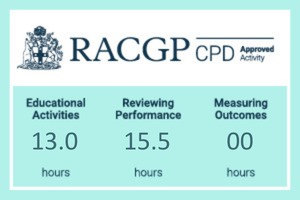
CPD Accredited Activity |
 AAA, eFAST, Vascular Access, Basic Early Pregnancy, DVT, Biliary
Features
- Modules (total) 8
- Skill level Novice
- Duration (days) 3
- Lectures (hours) 4.5
- Scan time (hours) 15.25
- Clinician No
Who should attend?
Rural practitioners Emergency medicine physicians and trainees GP's working in rural and remote settings RNs working in a rural or remote setting ParamedicsKey benefits for attendees
- Hands-on Practical Training: Participants will gain extensive, real-world experience through supervised scanning on diverse patient models, building confidence in using ultrasound in emergency settings.
- Point-of-Care Ultrasound (POCUS) Skills: Attendees will learn how to perform critical ultrasound applications such as eFAST, AAA, cardiac, abdominal, and vascular ultrasounds, allowing them to make rapid, informed decisions in emergency situations.
- Systematic, Structured Approach: The course emphasizes a structured, systematic approach to ultrasound scanning, ensuring participants are equipped with reliable techniques for accurate diagnosis in high-pressure environments.
- Enhanced Diagnostic Capabilities: Attendees will improve their ability to assess and diagnose a range of conditions on-site, reducing the need for patient transfer and enabling more effective management of complex cases in rural and remote settings.
- Immediate, Real-Time Application: The skills learned can be immediately applied to practice, helping physicians enhance patient care and clinical outcomes by using portable ultrasound devices in their day-to-day medical work.
- Tailored for Rural and Remote Practice: The course is specifically designed to meet the unique challenges of healthcare professionals working in rural and remote environments, providing tools and techniques that are practical and relevant to their practice needs.
- Expert Guidance and Support: Attendees will benefit from direct instruction and feedback from experienced ultrasound educators, ensuring a high-quality learning experience that emphasizes patient safety and clinical accuracy.
Why ultrasound matters
For rural generalists or emergency medicine physicians working in rural and remote settings, bedside ultrasound is a game-changer in providing immediate, accurate diagnostic information that is critical for making informed decisions. In environments where access to advanced imaging technologies like CT or MRI is limited or delayed, ultrasound allows healthcare professionals to assess a range of conditions quickly, from trauma and internal bleeding to cardiac and respiratory issues. This ability to perform point-of-care ultrasound (POCUS) enables physicians to stabilise patients, prioritise treatments, and make decisions on-site, potentially saving lives and improving outcomes, especially when time is of the essence. Ultrasound also plays a vital role in overcoming the challenges of distance and isolation in rural healthcare. In these settings, patients may have to travel long distances to receive specialized care, so the ability to perform real-time diagnostics significantly reduces the need for transfer to larger hospitals. By enhancing the physician's diagnostic capabilities, ultrasound allows rural healthcare professionals to manage complex cases more effectively and provide higher levels of care in situations where resources and support are scarce. Portable ultrasound devices have further revolutionised care in rural and remote settings by providing physicians with a compact, lightweight, and user-friendly tool that can be easily transported to various clinical environments, including emergency rooms, field settings, or patients' homes. Their portability, ease of use, and non-invasive nature make portable ultrasound devices ideal for addressing the varied and unpredictable needs of rural and remote medical practice, ensuring that healthcare professionals can deliver accurate, real-time diagnostics wherever needed. In rural general practice, having access to an ultrasound machine allows physicians to perform ultrasound imaging on-site, enabling faster diagnosis and treatment, and significantly improving patient outcomes in areas with limited access to specialized diagnostic services.Features
- Modules (total) 8
- Skill level Novice
- Duration (days) 3
- Lectures (hours) 4.5
- Scan time (hours) 15.25
- Clinician No